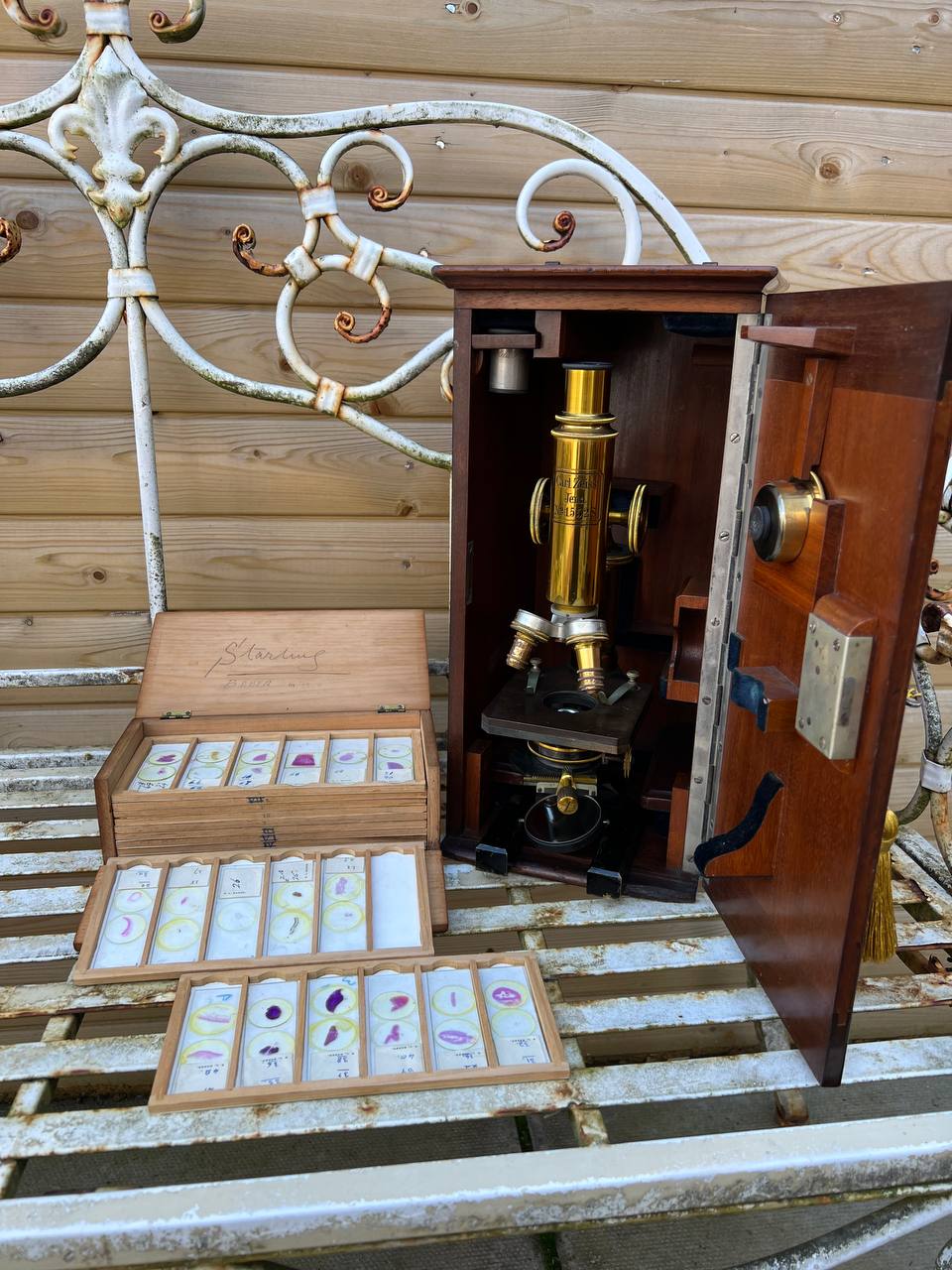

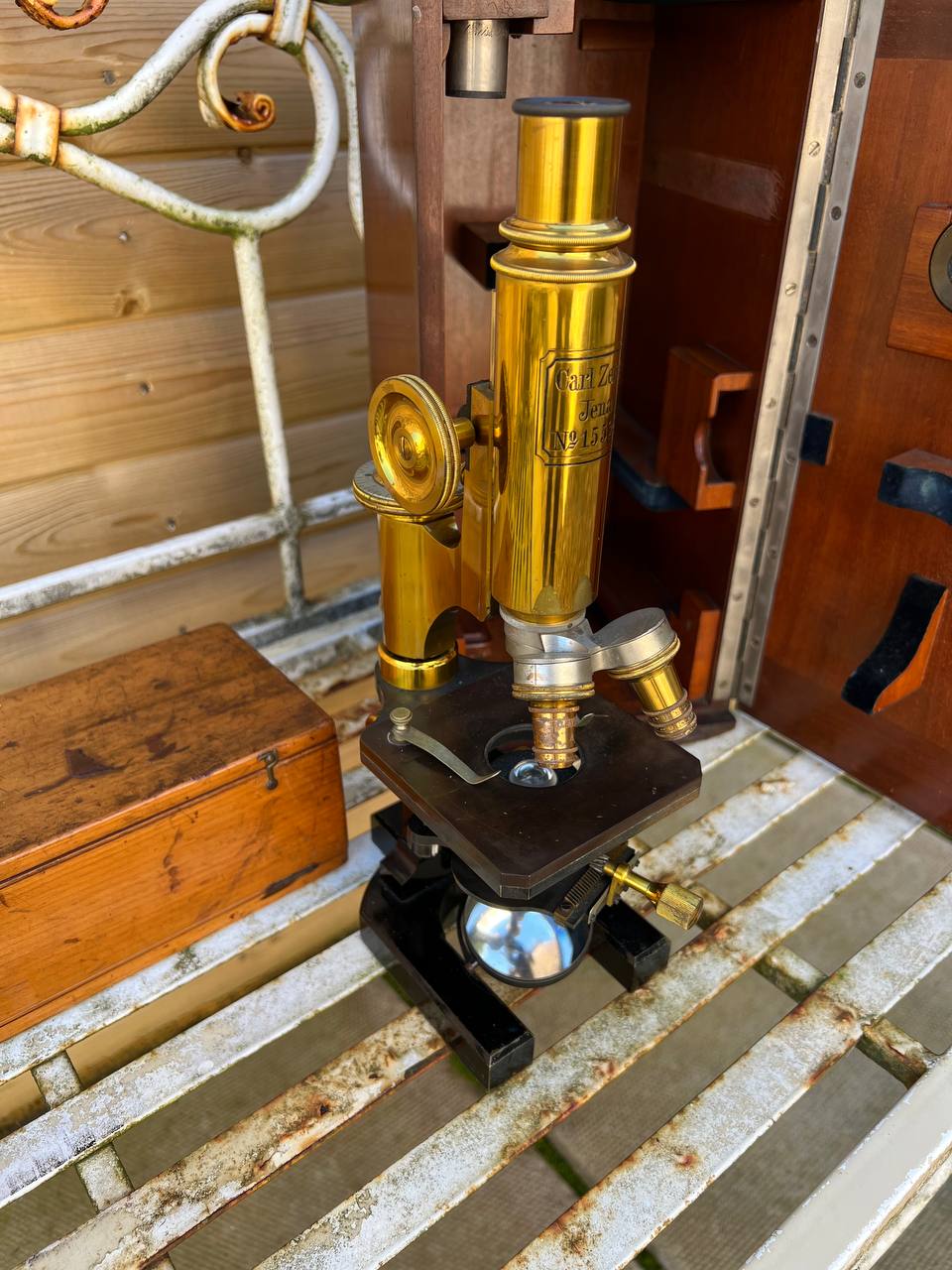
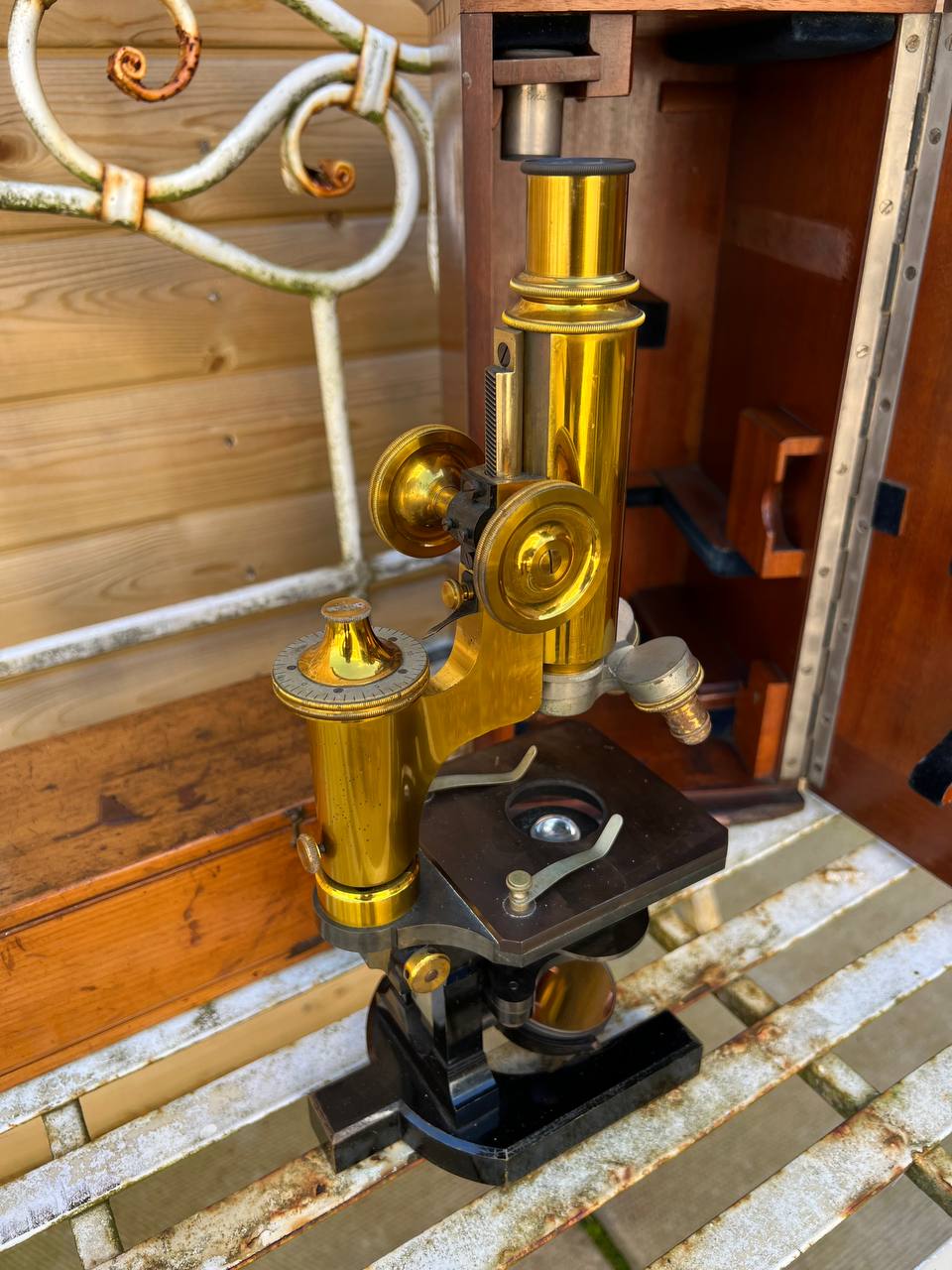
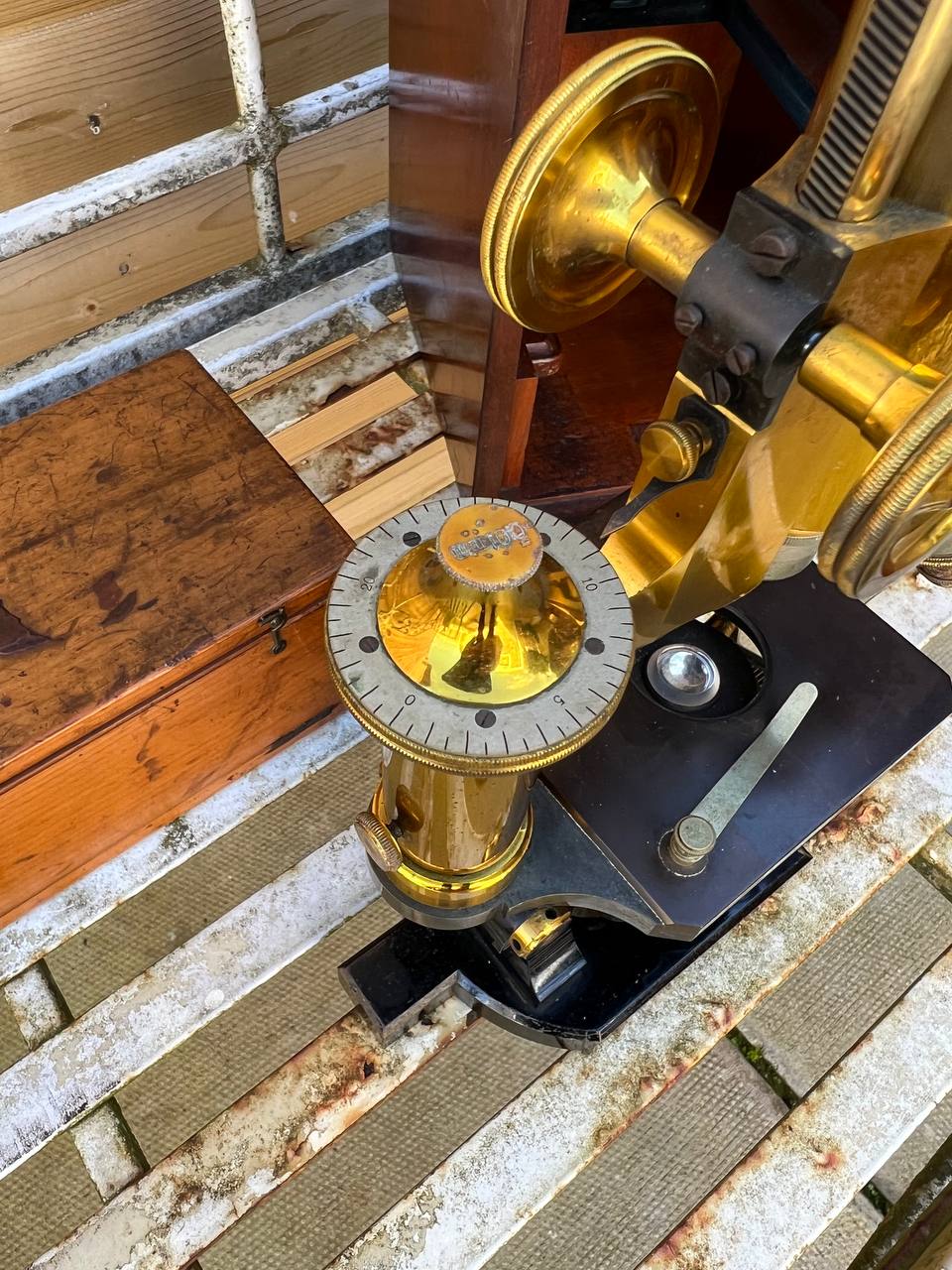
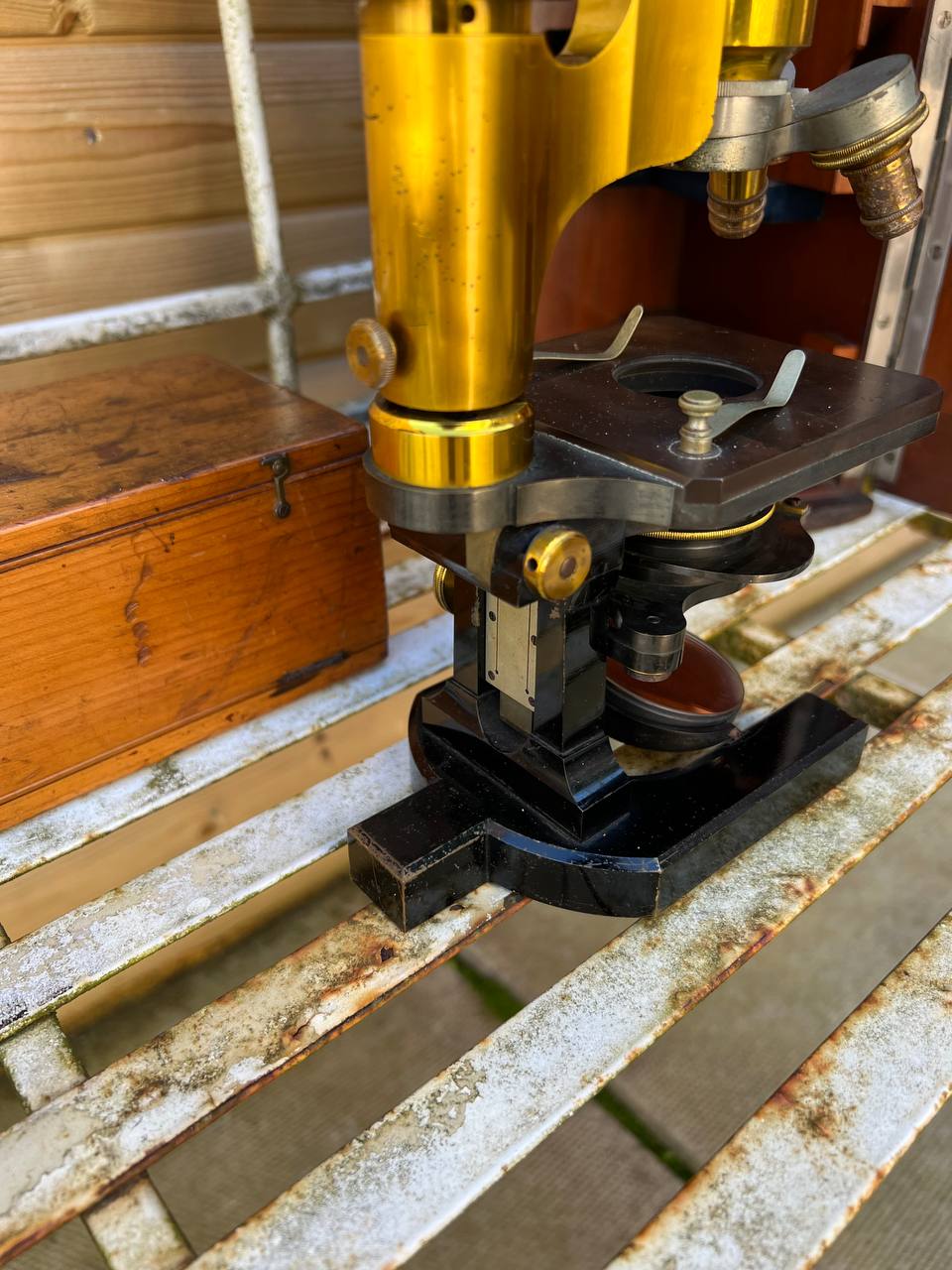

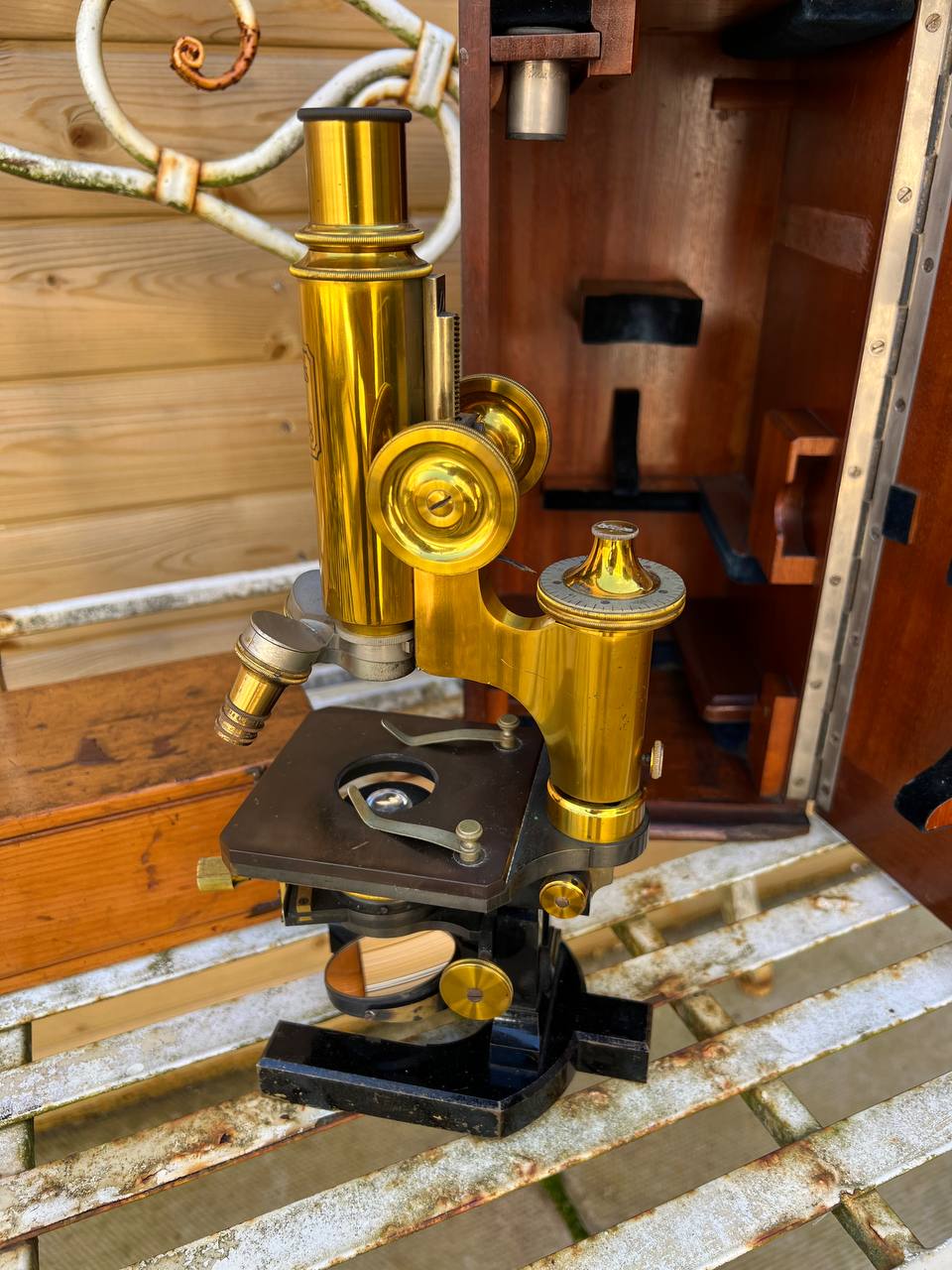
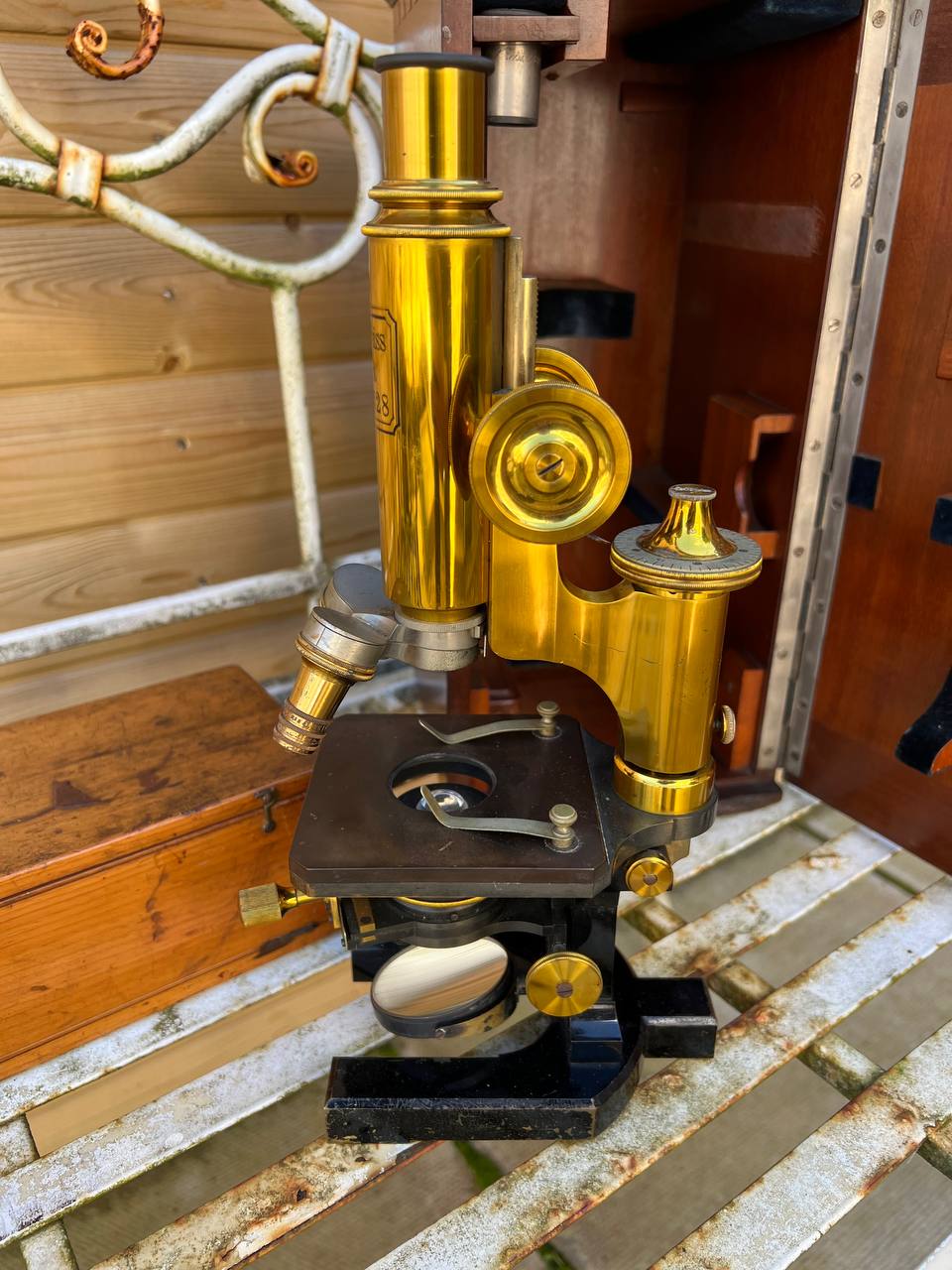
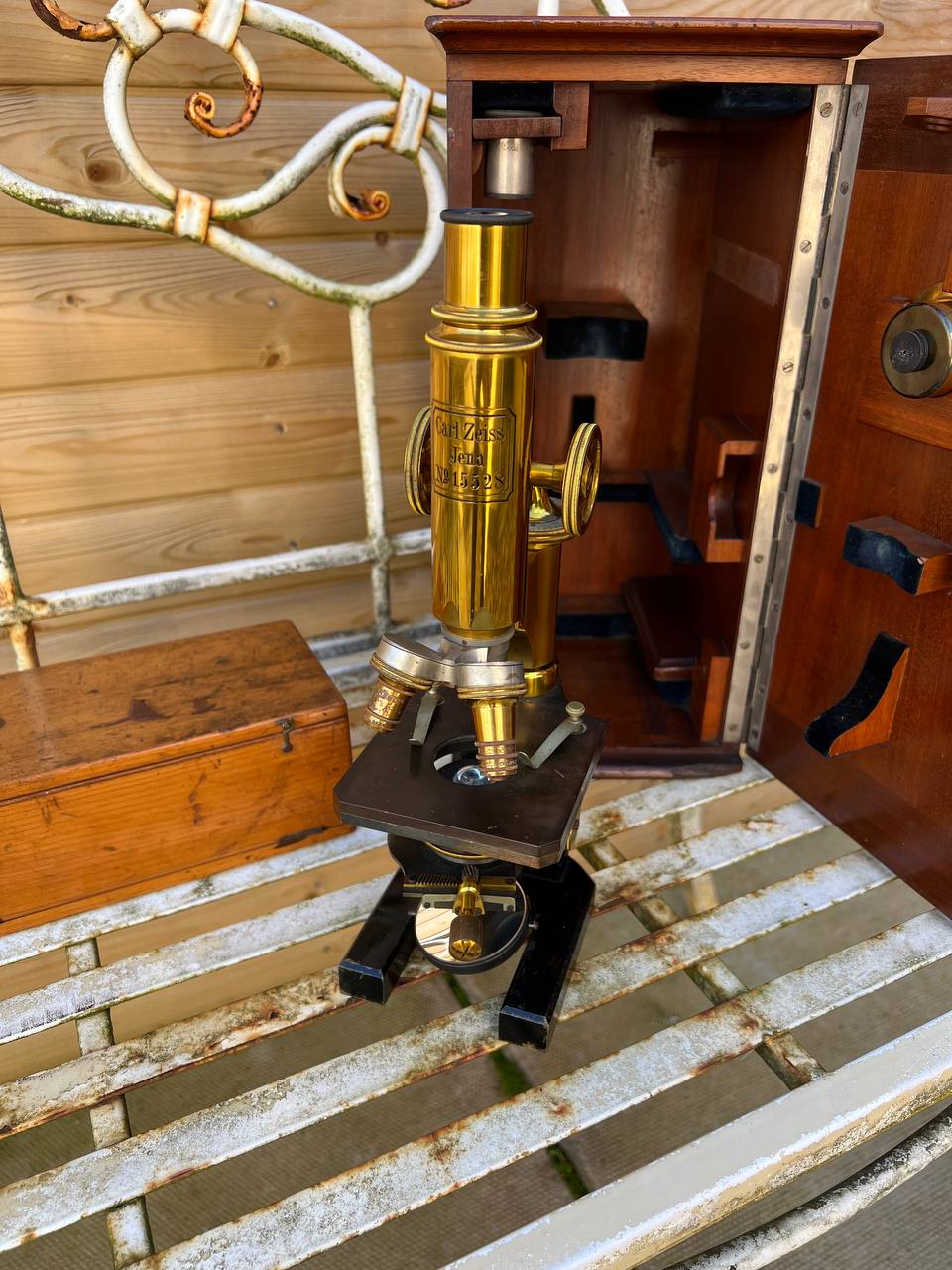
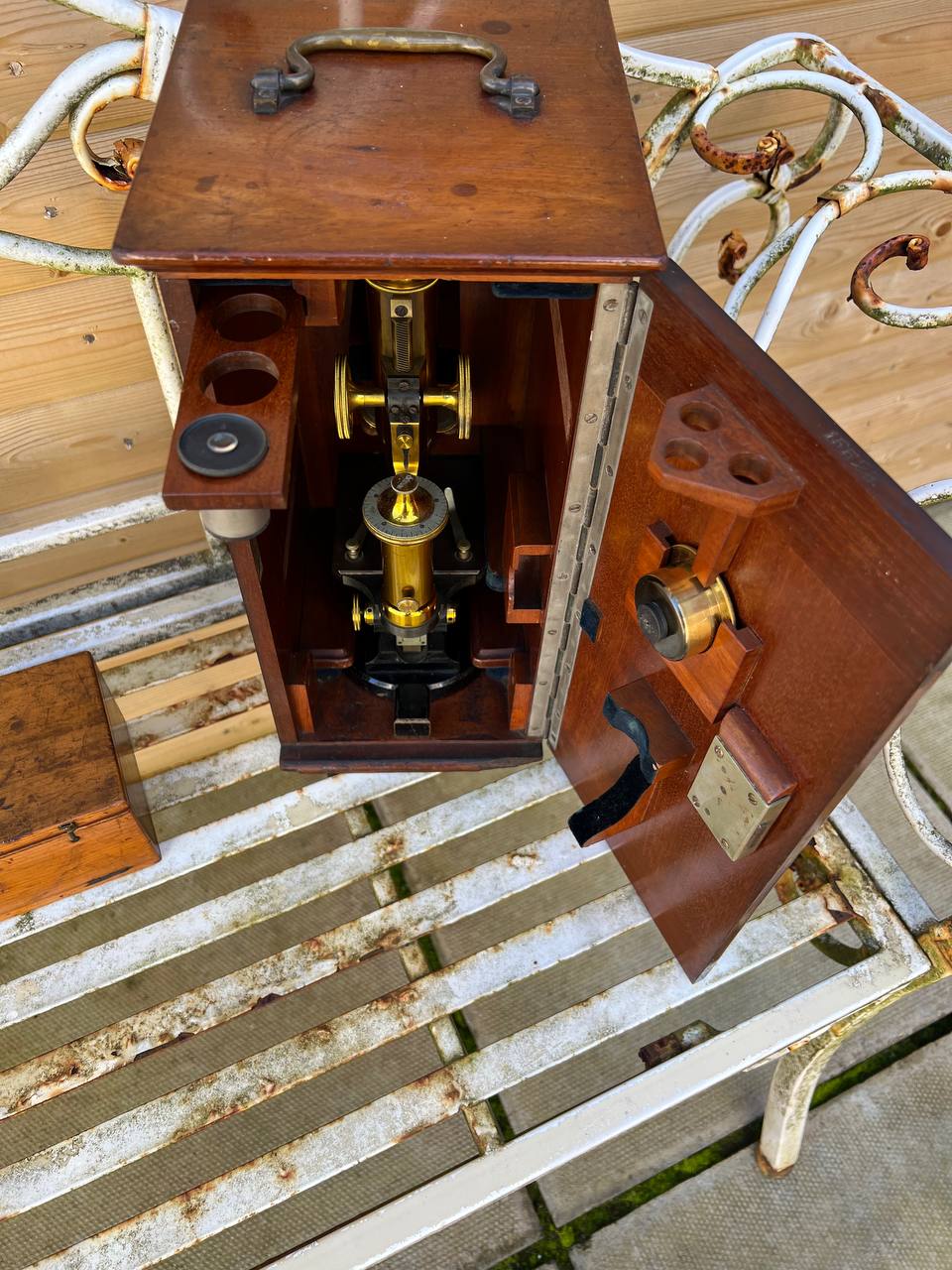
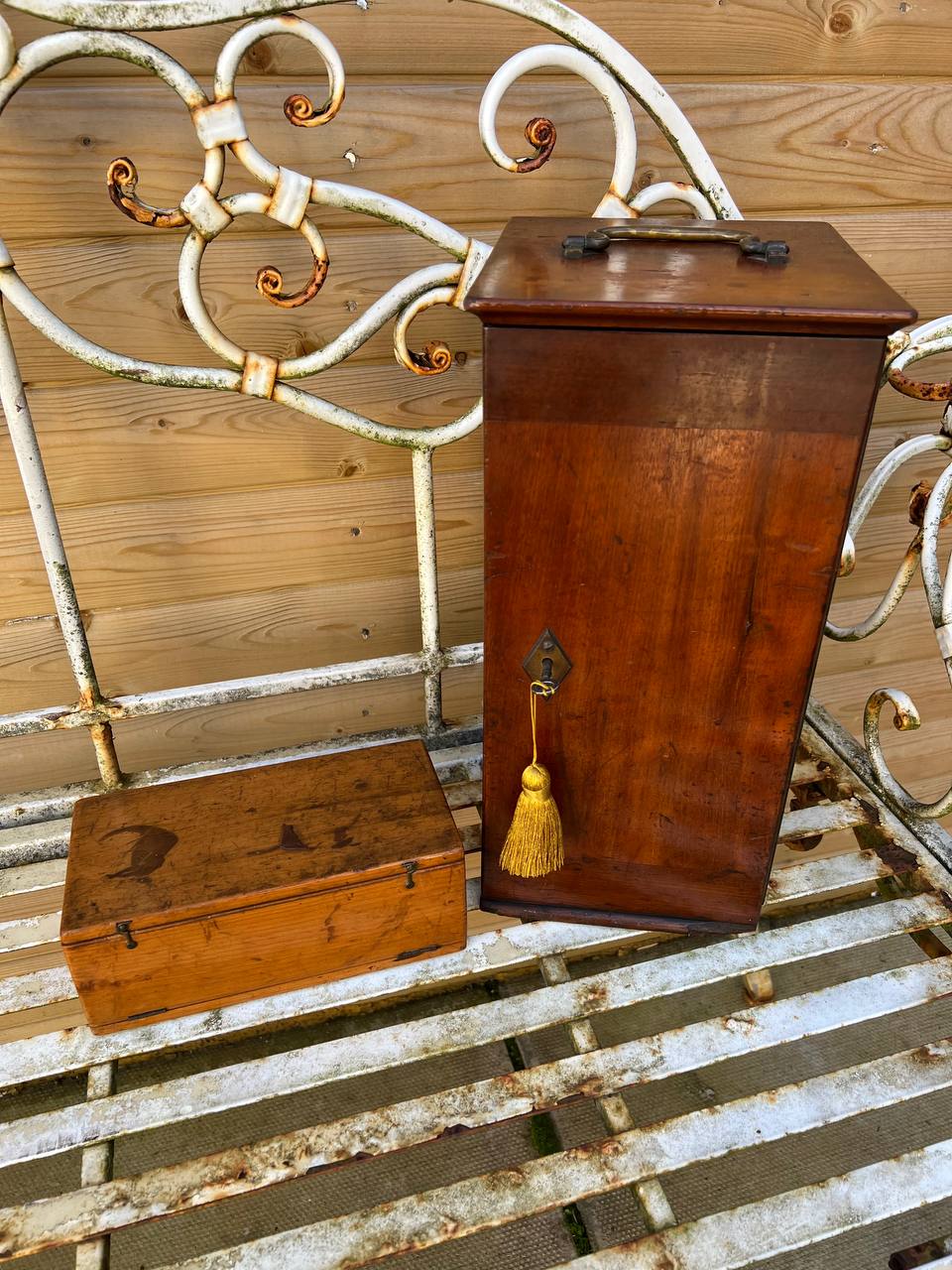
Carl Friedrich Zeiss 1890 Compound Achromatic Microscope With IVa Stand & Accessories.
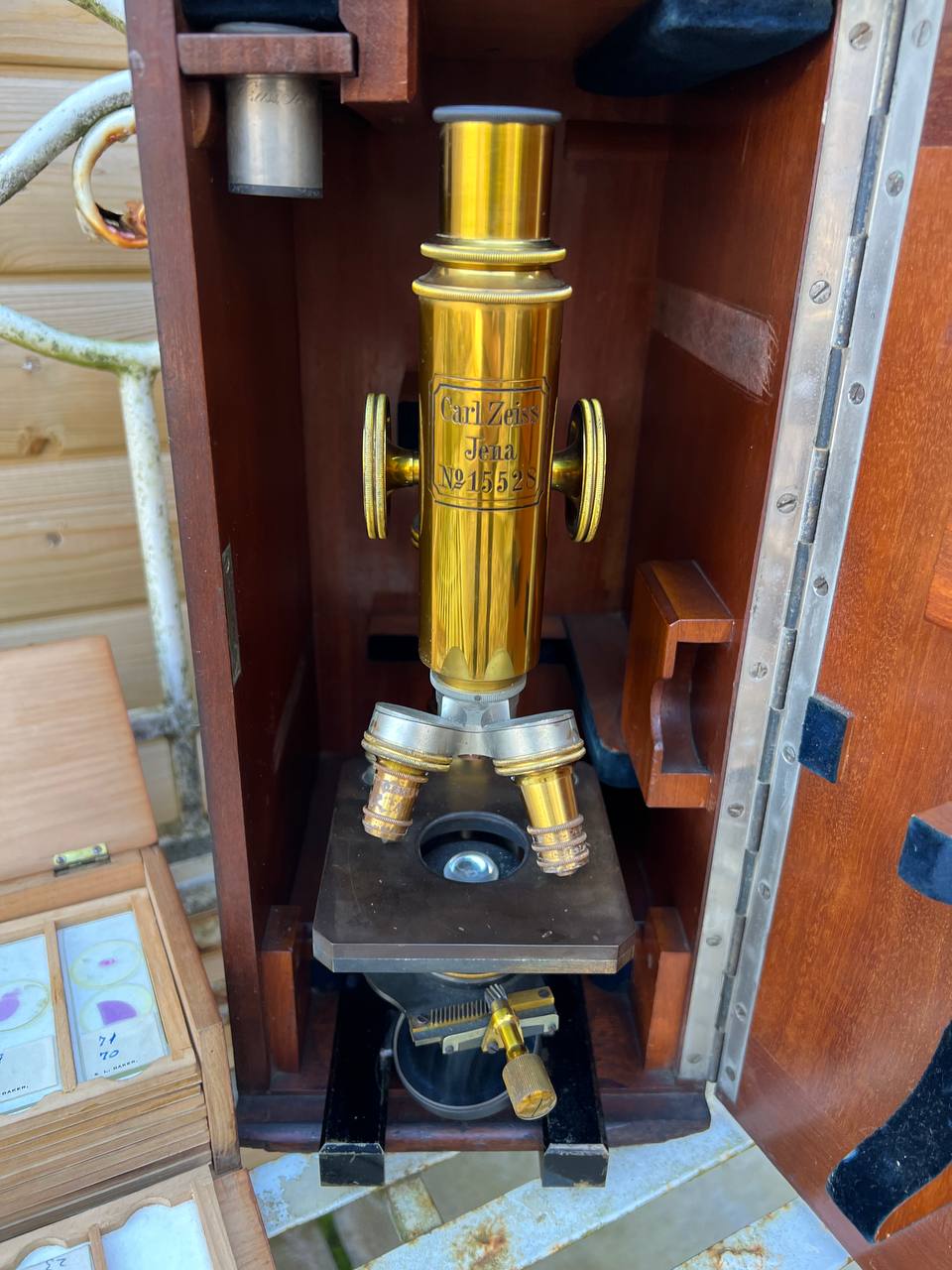
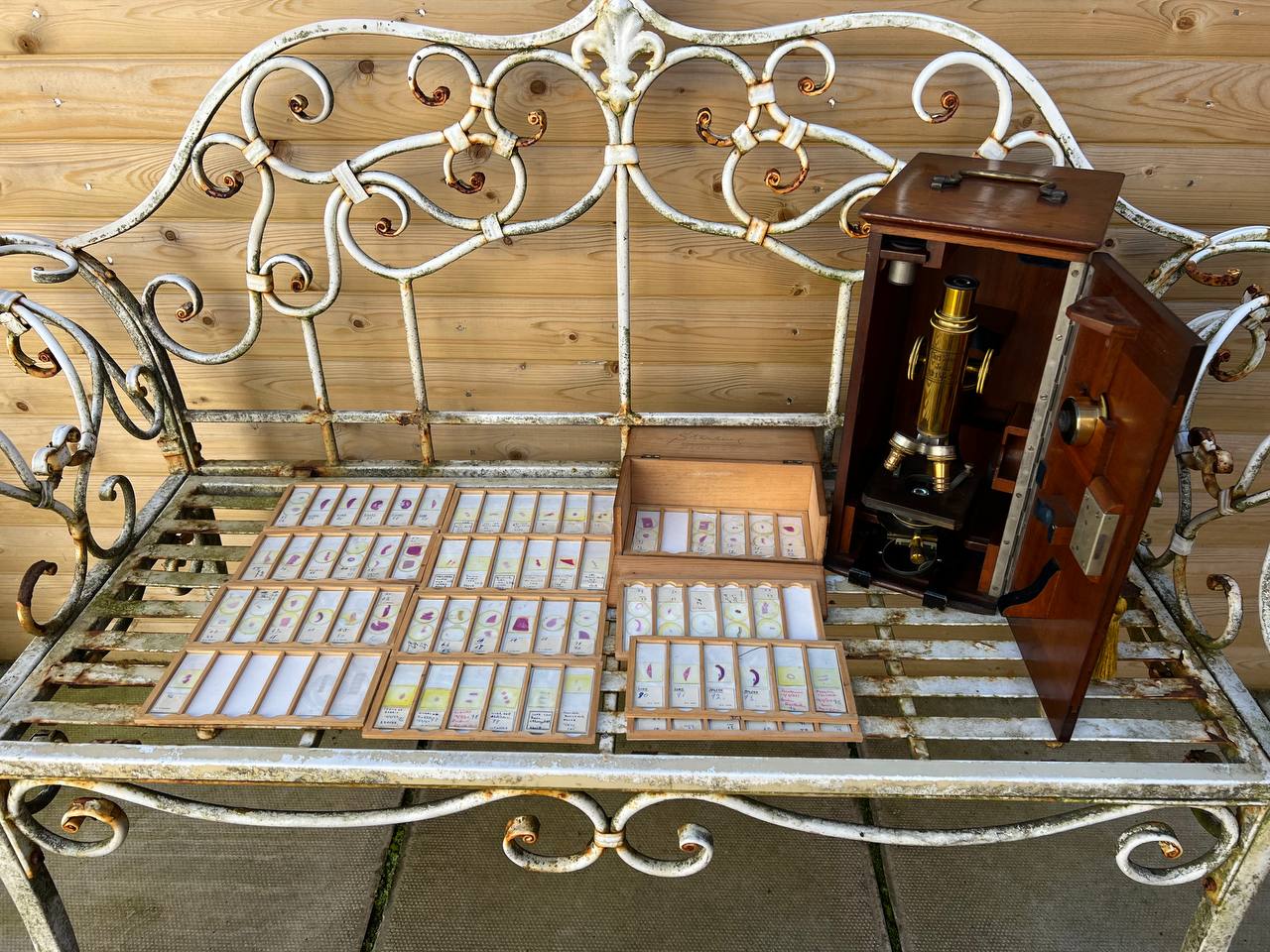
High-quality and authentic condition compound microscope by Carl Zeiss no. 15528.
Extendable eyepiece tube over a rack and pinion for the main focus.
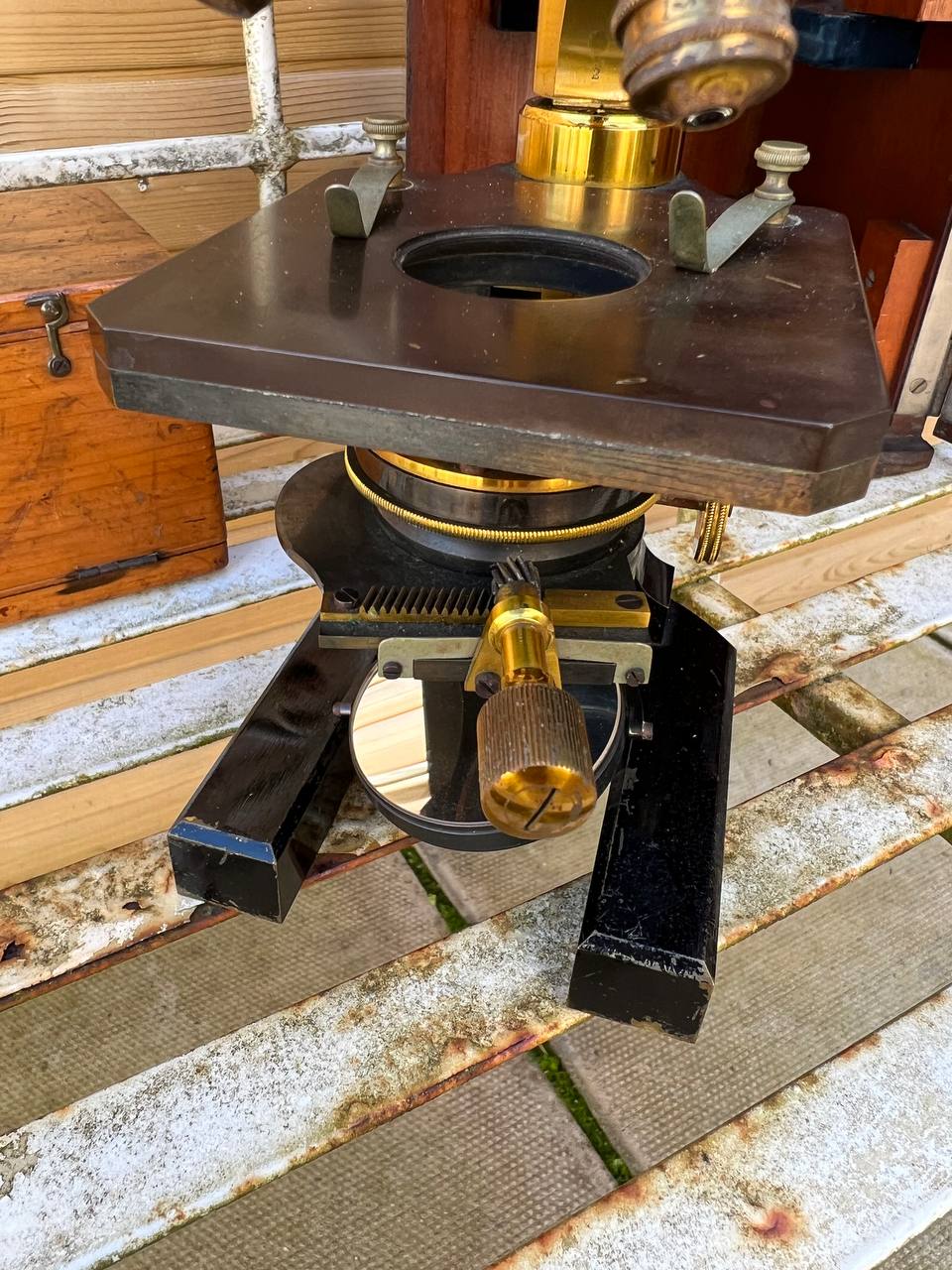
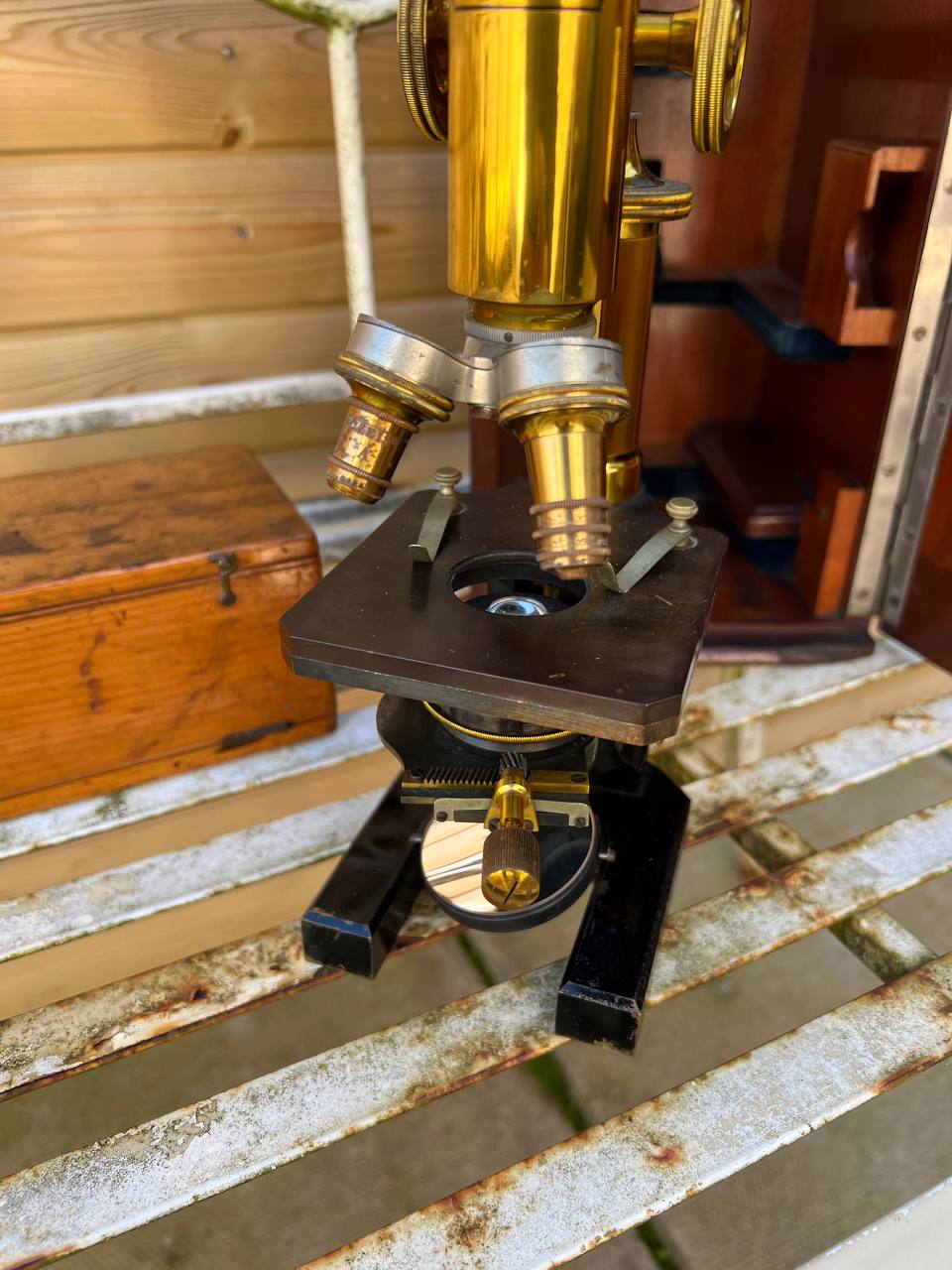
A triple revolving nosepiece resides above a square stage with a mechanical slide holder, every piece of this microscope is extremely high quality.
Bright Plano-concave mirror beneath the rack and pinion slide bed and holder.
An attractive and appealing scientific instrument displays a desirable aged patina.
The mahogany carry box shows a rich character and benefits from the working lock and key.
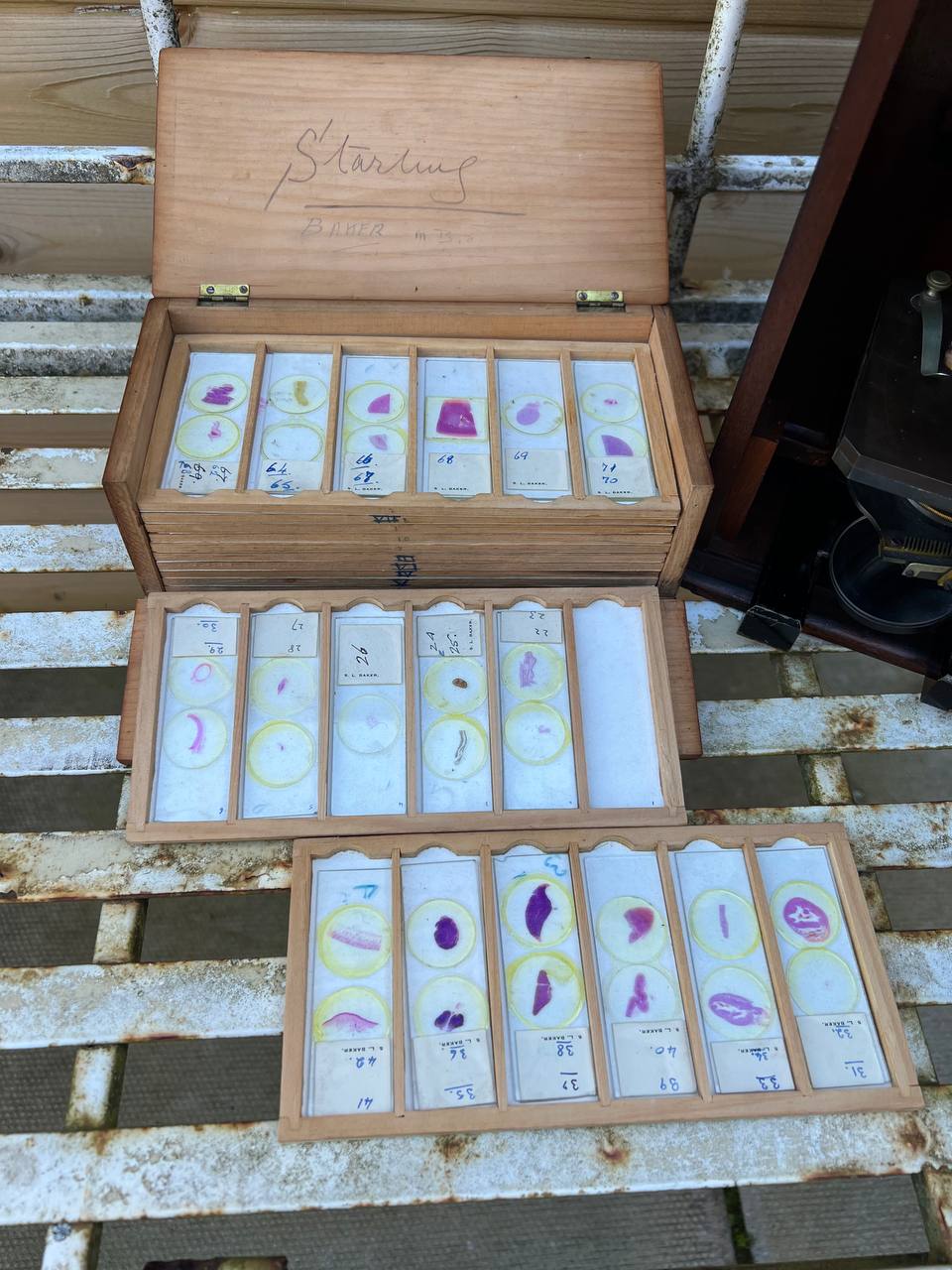
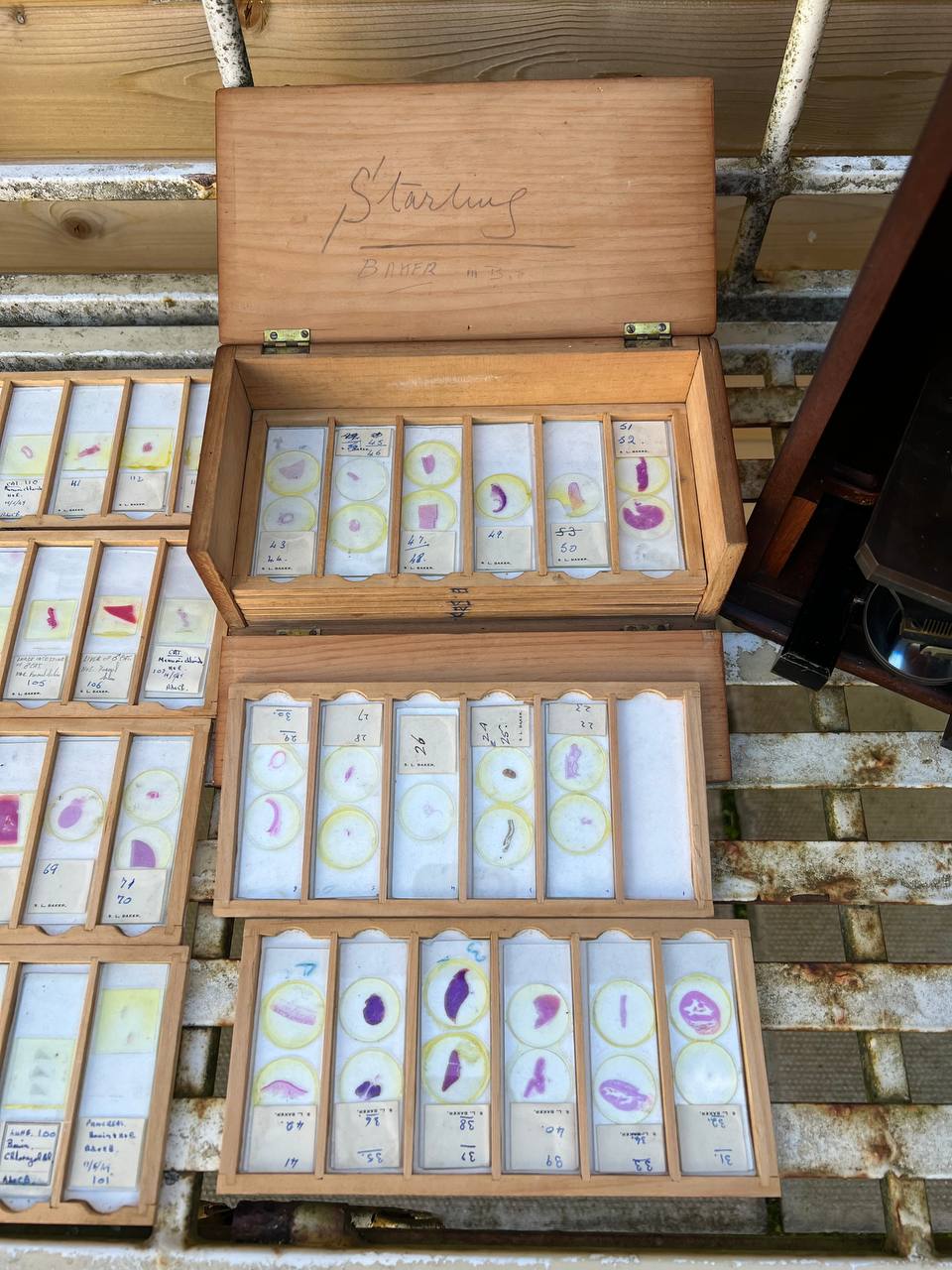
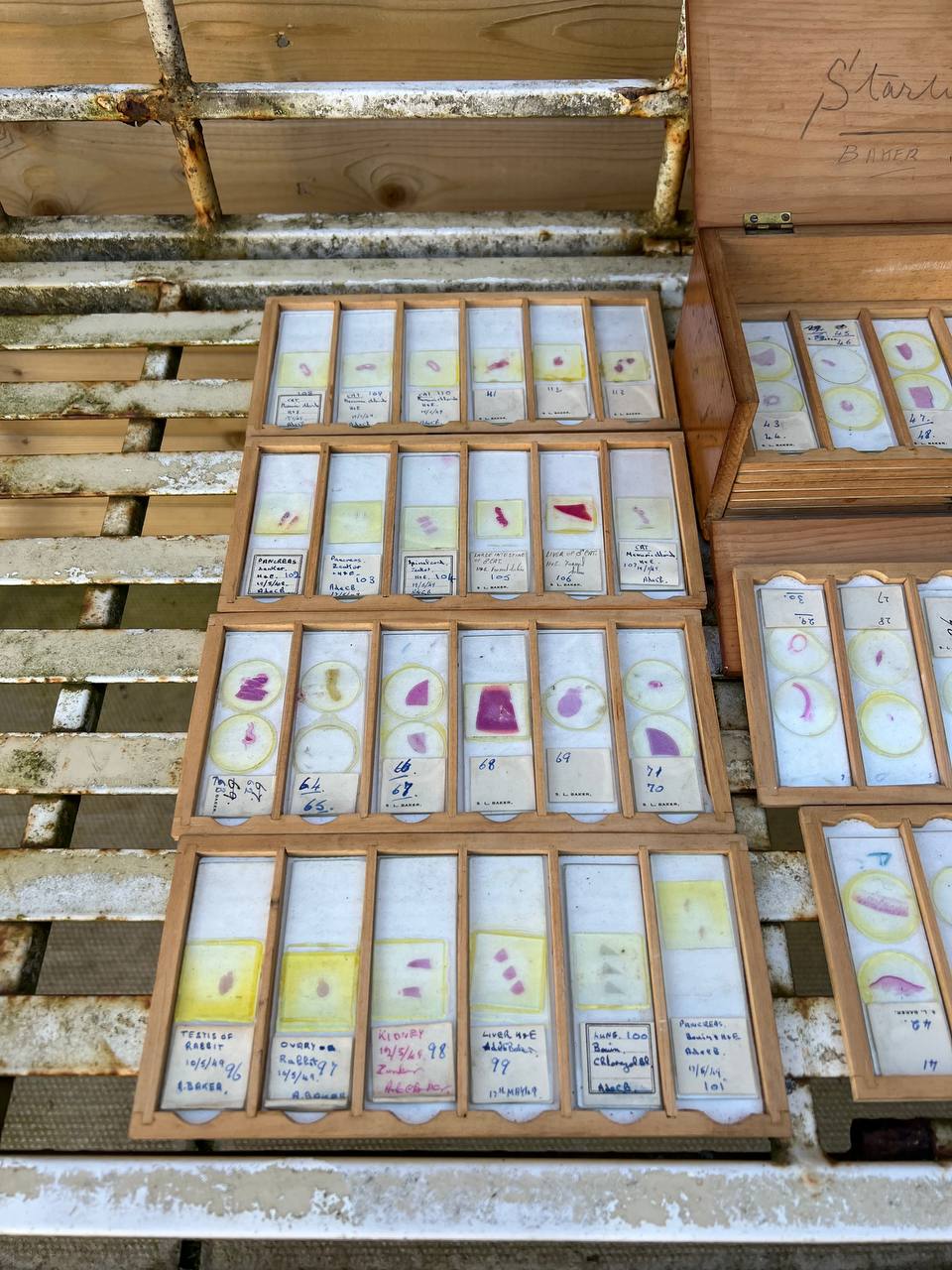
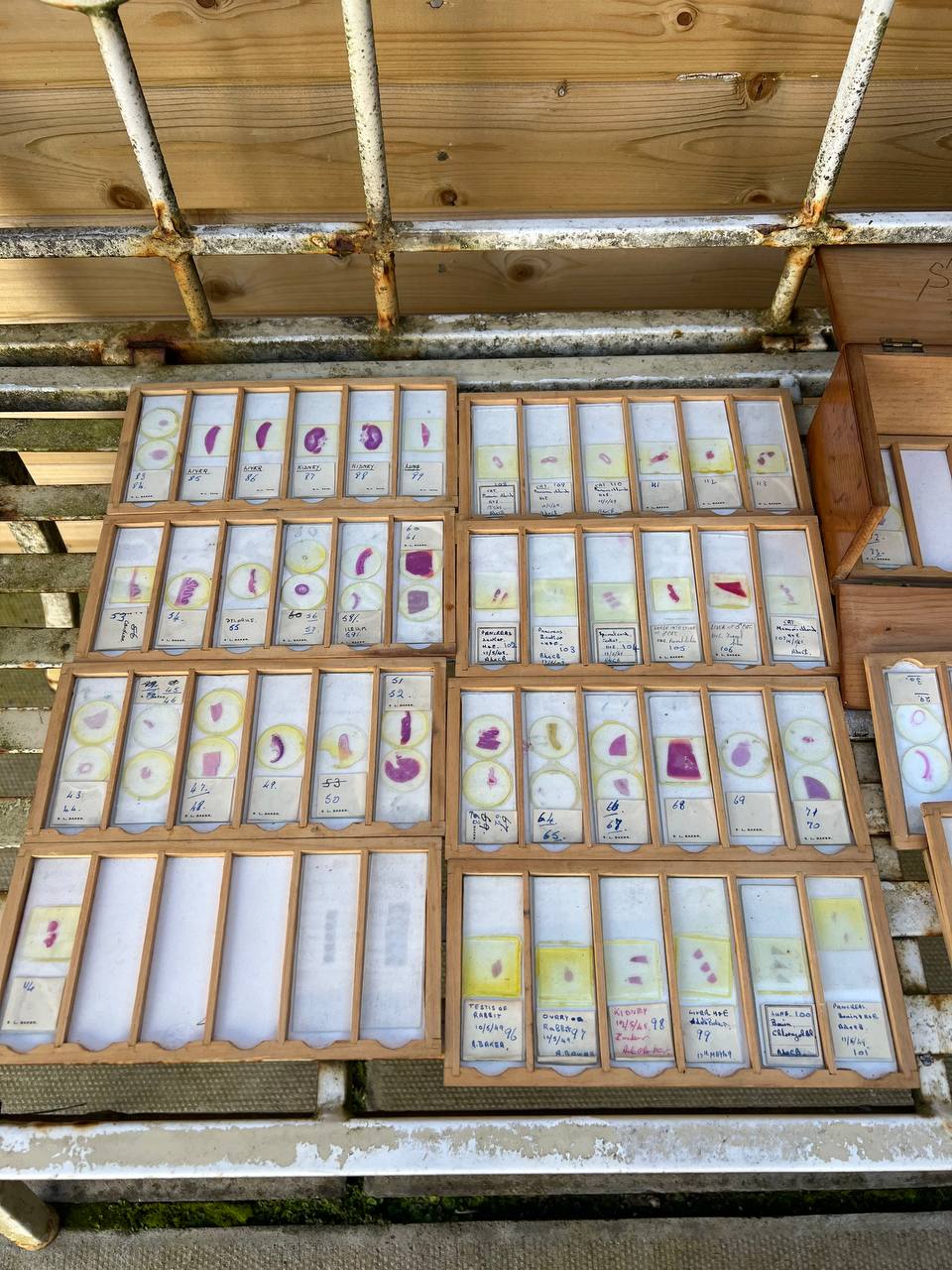
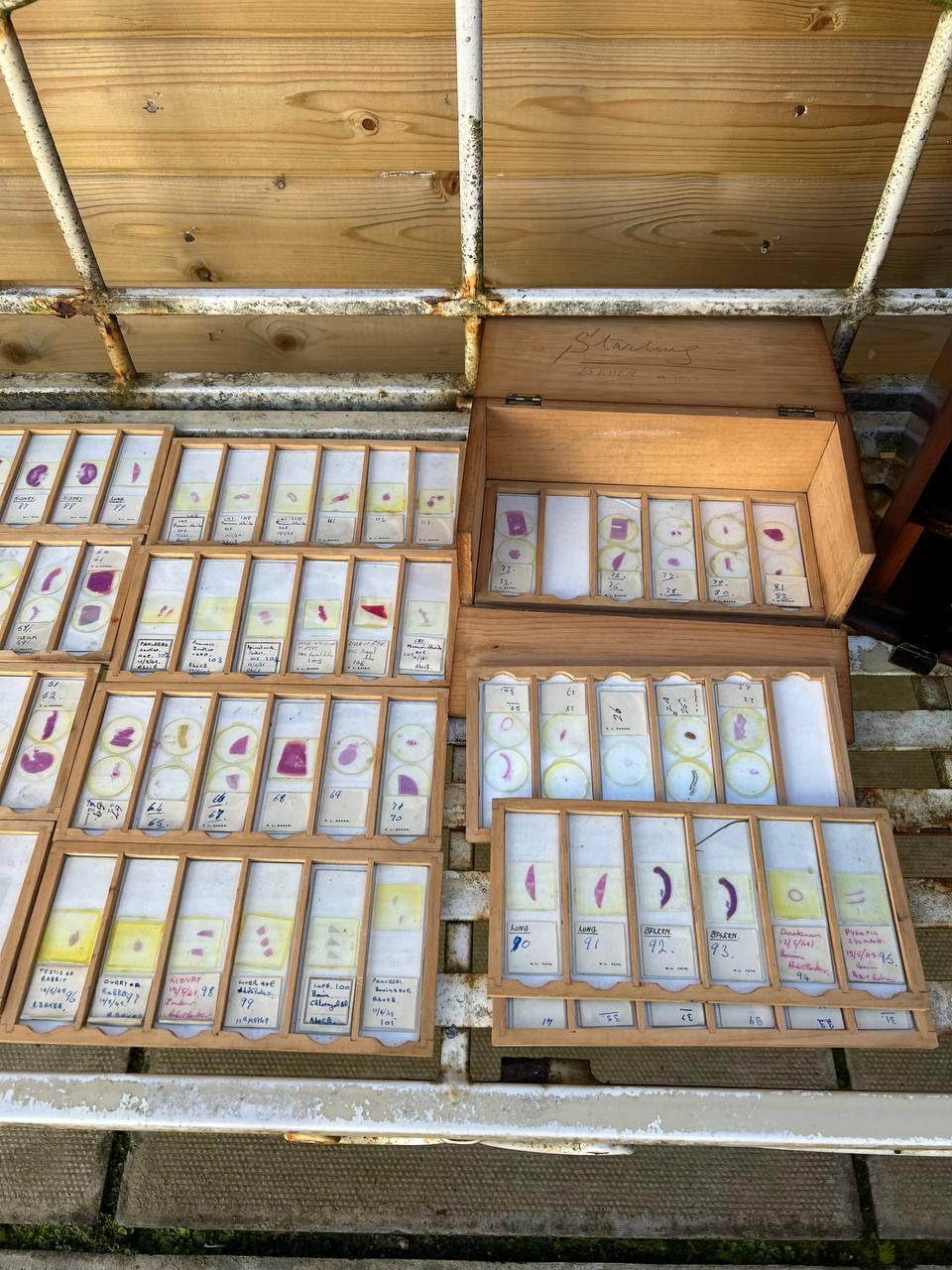
Complete with some accessories and a box full of microscope slides, I believe some lenses are missing but this doesn’t distract from this stunning example, and these pieces can be easily replaced if required.
2x eyepiece lens present.
The slide box contains roughly 70 slides.
This is a superb antique microscope with a high decorative appeal of fascination for those interested in scientific instruments. Ideal for the study or desk.
Measurements of the microscope box are: 20cm wide by 21cm depth by 37cm high handle is not included.
Measurements of the microscope are: 9.5cm wide by 14cm depth by 31cm high.
Measurements of the microscope slide box are: 21cm wide by 11cm depth by 8cm high.
Carl Friedrich Zeiss was born on 11 September 1816 in Weimar, a city in the German federal state Thuringia. He was the fifth child in a family of twelve children and was interested from childhood in physics and technology. In 1849, he married Bertha Schatter, who died a year later during the birth of their son, Roderich. In 1853, he remarried Ottilie, with whom he had two daughters and a son. Carl Zeiss died on 3 December 1888 and was buried in Jena.
Zeiss was apprenticed to Friedrich Kömer in Jena. Afterwards, in 1846, at the age of 30, he established a workshop and shop in Jena (Neugasse number 7) for precision engineering and optics. As well as simple microscopes, he also sold other scientific instruments, including balances. Jena University became his first regular customer thanks to the excellent quality of his microscopes and connections.
Medical doctors and scientists were, however, more interested in compound microscopes than simple ones, because of the higher magnification. As he was unsatisfied with the time-consuming production process, Zeiss brought in Ernst Abbe (1840-1905) from Jena University. Abbe advised separating the production of the objectives from that of the mechanical parts. Abbe’s theories about imaging in microscopy and the “sine condition” and his innovative approach to tools for microscopy resulted in fundamental improvements in Carl Zeiss’s microscopes and lenses.
Ernst Abbe became co-owner and retained the company name after Zeiss’ death in memory of his friend. which meant the foundation of the development of the present Zeiss empire. The company prospered until the partition of Germany after World War 2 when the company split also split into Carl Zeiss Jena and Zeiss Opton. It was not until 1990 that the two companies agreed to merge into a single foundation again. Since then, Carl Zeiss has become one of the largest and most respected optical firms in the world.
- Buyers will need to check with their local authorities to see if any customs and import taxes are applicable. Any additional customs and tax payments are the responsibility of the buyer.
- Bourne In Time Antiques Limited is not responsible for delays due to customs.
- The price does NOT include delivery.
- Delivery/collection of items must be purchased/organised separately from product purchase.
- Please ensure you have read and agree to the terms and conditions.